Table of Content
- A sudden house collapse due to termite damage may be covered by homeowners insurance.
- Find the Best Homeowners Insurance Companies Of 2022
- Are there any policies you can take out that will cover termites?
- Company Reviews
- Home Insurance Tips
- Not sure if you're with the right policy? Compare other home insurance options today
If they appeared after a major storm or a flood, it’s likely that this was the cause and you can prove it by showing evidence from the previous case. Bring this evidence to your agent and claim it as the proximate cause to get reimbursed for the termite damage. Some pest control and building inspection companies offer home insurance when you have a full termite treatment installed. Policies often include timber replacement up to a certain value if termites damage your home. You'll usually be required to have your home inspected annually for termites as well. Home insurance covers problems that are considered “sudden and accidental.” Termite damage is gradual and can be prevented with maintenance.

Home insurance doesn’t cover problems that are due to poor maintenance. It may be surprising, but Australian insurance providers do not cover termite damage. The availability, qualifications, and amounts of coverages, costs and discounts may vary from state to state and there may be coverages and discounts not listed here. In addition, other terms, conditions, and exclusions not described above may apply, and total savings may vary depending on the coverages purchased.
A sudden house collapse due to termite damage may be covered by homeowners insurance.
You can use MoneyGeek’s personal property calculator below to get an estimate based on the value of your belongings. In addition, your policy won’t cover the costs of termite extermination and preventive measures. These expenses usually fall under home maintenance, not emergencies or accidents. According to theNational Pest Management Association , termites are responsible for more than $5 billion in property damage each year.

In some cases, the estimates from the contractors can vary greatly, and shopping around for the best and most affordable option may help you save money on repairs. The cost of getting rid of termites can range from $500 to $5,000, depending on the extent of the infestation and size of the home. You also must file a claim for the initial damage caused by the peril.
Find the Best Homeowners Insurance Companies Of 2022
Keep in mind that every policy is different, so be sure to read your policy or talk to your agent to understand how your policy would react to termite damage. Unfortunately, there is no such thing as a termite insurance policy. Home insurance companies will not cover termite damage that results from neglect. If the homeowner failed to address potential entry points, the infestation would not be covered by insurance.
Of course, every home insurance carrier is different, so it pays to find out what your policy covers and doesn't cover before you sign on the dotted line. The best way to get rid of termites is to call in a professional to take care of the infestation. Avoid stacking firewood next to your home and keep plants a few feet away from your house. The sound of the wood can be an indicator you have termites. Get a screwdriver and try tapping on wood that you suspect is being eaten by termites.
Are there any policies you can take out that will cover termites?
That means our opinions are our own and we work with lots of home insurance brands, making it easier for you to find a good deal. Regularly inspect the foundations of the building and look for signs of mud tubes, uneven or bubbling paint and wood that sounds hollow when tapped. Note that the above prices are very rough indications only. They are only to give a sense of the cost of different options relative to each other. They should not be used as an indication of how much a treatment might cost you, or how much to expect from a quote. We’re transparent about how we are able to bring quality content, competitive rates, and useful tools to you by explaining how we make money.
Experts recommend treating every five to 13 years, depending on the type of treatment. Mark Fitzpatrick is a senior content manager with MoneyGeek specializing in insurance. Mark has years of experience analyzing the insurance market and creating original research and content. He graduated from Boston College with a Bachelor of Arts and Johns Hopkins University with a Master of Arts. Jason Metz is a writer who has worked in the insurance industry since 2007. As a former claims handler and fraud investigator, he’s seen a lot, and enjoys helping others navigate the complexities and opaqueness of insurance.
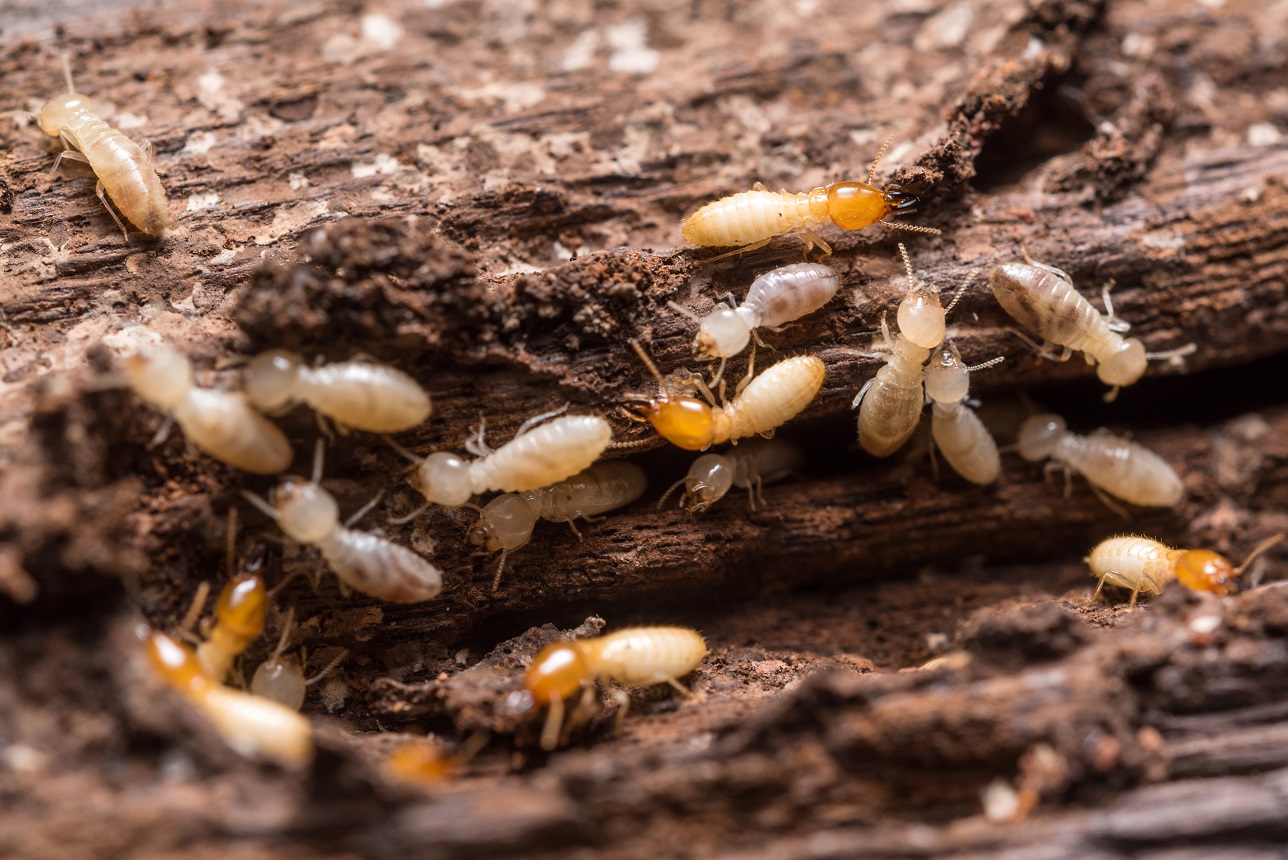
Termites can cause severe damage to a home in as little as three years, according to North Carolina State University . A termite colony can house up to 2 million termites, and a termite colony's queen can lay thousands of eggs every day. A termite is a saw-toothed insect that eats wood and other cellulose-rich materials, such as flooring and wallpaper. Measuring four to six inches in length, termites live in colonies, and a thriving colony can nurture between 50,000 and 2 million members. Finally, a termite colony's queen can live up to 30 years and lay thousands of eggs every day. Home insurance carriers expect policyholders to identify, combat and eradicate termites before any damage becomes critical.
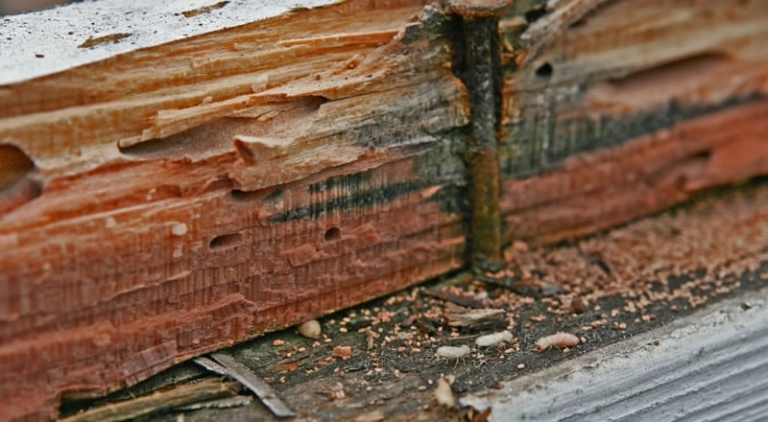
If you hear a hollow sound, this is an indicator the termites are eating on the inside and that’s why there is no visible exterior damage. It’s important to inspect the house for termites as they can do some serious damage to your home. We've researched and rated dozens of policies as part of our Finder Awards. We provide unique insights and our in-house experts regularly appear on Sunrise, 7News and SBS News. Repairs that require replacing structural supports are more complicated, and many homeowners choose to hire an experienced contractor to complete these repairs. If that’s the case, you may benefit from getting estimates from several local contractors before choosing one to make repairs.
One of them is if a termite infestation causes your house to collapse — not just cracking, bowing or sagging, but actually falling apart and becoming uninhabitable. However, you may only receive compensation if you have no prior knowledge about the infestation. That means you must prove that the infestation was hidden and completely unknown to you. But in some rare cases, you may be able to get coverage for damage caused by a termite infestation up to the dwelling coverage limit of your policy.

Usually, this is only true if you couldn’t reasonably have known about the termites and the damage they were causing (i.e., the termites and their damage was hidden). But if you ignore signs that you have termites or choose to do nothing about them, then your insurance company will most likely deny your claim. During the inspection, your termite control professional will look for signs of termites both inside your house and around your property.
Because a burst pipe is a type of water damage typically covered by home insurance, then your insurer may also cover your hidden termite-related damage. Insurance companies generally don’t sell termite coverage, but some pest control companies offer plans for annual inspection and treatment. Before buying a home, you should have it inspected for termites.

Owners who worry about termites can ask neighbors what experiences they’ve had presenting a claim with their company. When seeking a fix for damage that may have occurred from an infestation, it’s important for homeowners to understand that typical home insurance policies do not cover termite damage. With this understanding, a homeowner is in a better position to research and understand the specific situations where losses due to termites may be covered by insurance. From there, steps can be taken to determine how to repair damage.
Can termites actually damage my home?
Say, for example, a wood porch starts looking unusually worn and swollen from its original shape. An insurer will contend that the owners neglected this evidence of termites eating away at the porch, and that the owner should have addressed it. Any type of deferred maintenance that results in damage is due to owner negligence, and an insurer will contest that claim. If there is existing termite damage, the damage should first be evaluated by a building expert or building contractor.




No comments:
Post a Comment