Table Of Content
It incorporates a lot of previous statistical and management techniques. Robustness is a concept that enters into statistics at several points. At the analysis, stage robustness refers to a technique that isn't overly influenced by bad data. Even if there is an outlier or bad data you still want to get the right answer.
Apply Full Factorial DOE on the same example
Compared to other experimental approaches, DOE saves time and resources when performing experiments, whilst providing deeper insight into complex systems. The method was coined by Sir Ronald A. Fisher in the 1920s and 1930s. Design of Experiment is a powerful data collection and analysis tool that can be used in a variety of experimental situations. Optimal performance of your process is locked inside current performance, just waiting to be discovered. The optimal process can emerge once all the variables are adjusted appropriately.
One factor at a time (OFAT) method
This could work well, but it’s important to think carefully about whether you’re optimizing for the right thing. Maximizing gene expression alone could give you the best productivity. But it’s quite likely that the relationship between expression and yield is quite complicated. But perhaps choosing the simplest approach and directly maximizing the yield, leaving the interplay of underlying mechanisms unspecified, would be a better choice. In most cases, you don’t want to just understand what’s going on, you also want to find a way to get your system to do something useful in the most efficient way you can (figures 3 & 4). To do this still requires you to characterize the system to some extent - it’s not possible to exert much control if you don’t have at least some understanding of what’s going on.
The design you choose will inform your analysis
In this second experimental series, the pH is changed from 2.5 to 5.0 and you can see the measured yields. In order to understand why Design of Experiments is so valuable, it may be helpful to take a look at what DOE helps you achieve. A good way to illustrate this is by looking at an alternative approach, one that we call the “COST” approach. Another important application area for DOE is in making production more effective by identifying factors that can reduce material and energy consumption or minimize costs and waiting time. It is also valuable for robustness testing to ensure quality before releasing a product or system to the market.
Statistical experiments, following Charles S. Peirce
It also helps remove complexities and streamlining the design process for cost management in the manufacturing process. Full factorial designs investigate all possible combinations of factors and levels. Full factorial designs, however, involve a large number of runs, increasing exponentially as the number of factors increase. The Design of Experiments (DoE) landscape is rich with diverse strategies tailored to uncover specific insights within various research domains. At the foundation, we have basic designs such as the completely randomized design and the randomized block design, which serve as the starting points for most experimental frameworks.
Around 1990 Six Sigma, a new way of representing CQI, became popular. Now it is a company and they employ a technique which has been adopted by many of the large manufacturing companies. This is a technique that uses statistics to make decisions based on quality and feedback loops.
Generalized Linear Models in Python: A Comprehensive Guide
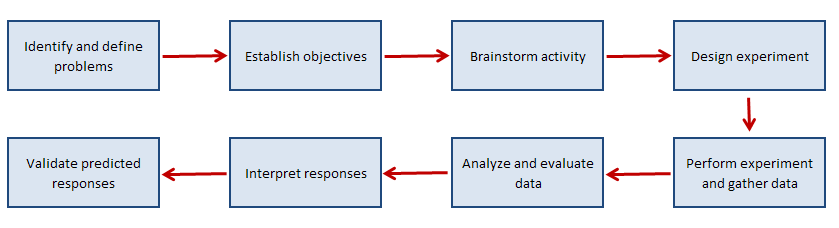
At any stage in your DOE campaign, you could take your pick from several designs, depending on your assumptions, goals, available run numbers, and so on. The beauty of DOE is that by choosing a DOE design, you have also chosen the type of analysis you will do. By picking the right design in the beginning, you’ll be saving yourself tons of work and grief when it comes to the analysis. Which means that you don’t have to design a single experiment—or pick a single DOE design—that will answer all your questions. So, for example, first we might fix the pH at 3, and change the volume of the reaction container from a low setting of 500ml to a high of 700ml. Additional content around the benefits of subscribing to this blog feed.
Trial-and-error method
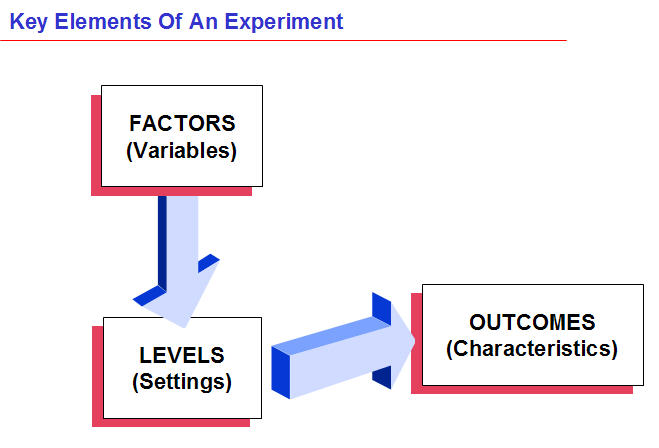
Two of the most common approaches to DOE are a full factorial DOE and a fractional factorial DOE. Let’s start with a discussion of what a full factorial DOE is all about. In 1950, Gertrude Mary Cox and William Gemmell Cochran published the book Experimental Designs, which became the major reference work on the design of experiments for statisticians for years afterwards. You can also compare different levels for given factors, such as whether a cultivar from nursery A produces a higher yield, better taste, or both than a plant from nursery B. Strawberries also need plenty of water to ensure juiciness; applying 1ml of water would be difficult to accurately achieve and, possibly, trigger drought stress responses.
Regardless of who or what is involved in the process - it is still going to work. We will come back to this notion of robustness later in the course (Lesson 12). As an example of a one-factor experiment, data from an incoming shipment of a product is given in Table 1. Specify how you can manipulate the factor and hold all other conditions fixed, to insure that these extraneous conditions aren't influencing the response you plan to measure. The same problems of having “low resolution” will apply to your DOE design.
However, the nature of the independent variable does not always allow for manipulation. In those cases, researchers must be aware of not certifying about causal attribution when their design doesn't allow for it. The same goes for studies with correlational design (Adér & Mellenbergh, 2008).
Process optimization of twin-screw melt granulation of fenofibrate using design of experiment (DoE) - ScienceDirect.com
Process optimization of twin-screw melt granulation of fenofibrate using design of experiment (DoE).
Posted: Mon, 25 Jan 2021 08:00:00 GMT [source]
This is when you might choose to run a fractional factorial, also referred to as a screening DOE, which uses only a fraction of the total runs. That fraction can be one-half, one-quarter, one-eighth, and so forth depending on the number of factors or variables. Design of Experiments is a framework that allows us to investigate the impact of multiple different factors—changed simultaneously—on an experimental process. A perfect cup of tea depends on multiple other factors, such as the blend, brewing time, and the addition of sugar. In other words, making a perfect cup of tea is complex and multidimensional.
You can then use the predictive model to find the factor settings or region that will optimize your response. Run all possible combinations of factor levels, in random order to average out effects of lurking variables. A more effective and efficient approach to experimentation is to use statistically designed experiments (DOE).
Originally developed for manufacturing processes, the Six Sigma methodology is now leveraged by companies in nearly all industries. In this article, we will share information about successful Six Sigma projects, methods, and more. Discover the essence of lean management – a powerful approach to streamline processes and maximize efficiency. First, it’s crucial to identify the knowledge gaps, market demand, quality issues, and process bottlenecks. They will help to define exactly what problem needs to be addressed.
As well as these savings, DOE achieves higher precision and reduced variability when estimating the effects of each factor or interaction than using OFAT. It also systematically estimates the interaction between factors, which is not possible with OFAT experiments. In a series of blogs, we’re going to explore the basis of DOE, who should consider DOE, and some ways in which this methodology helps experimental biologists deal with life’s inherent complexity.




No comments:
Post a Comment